


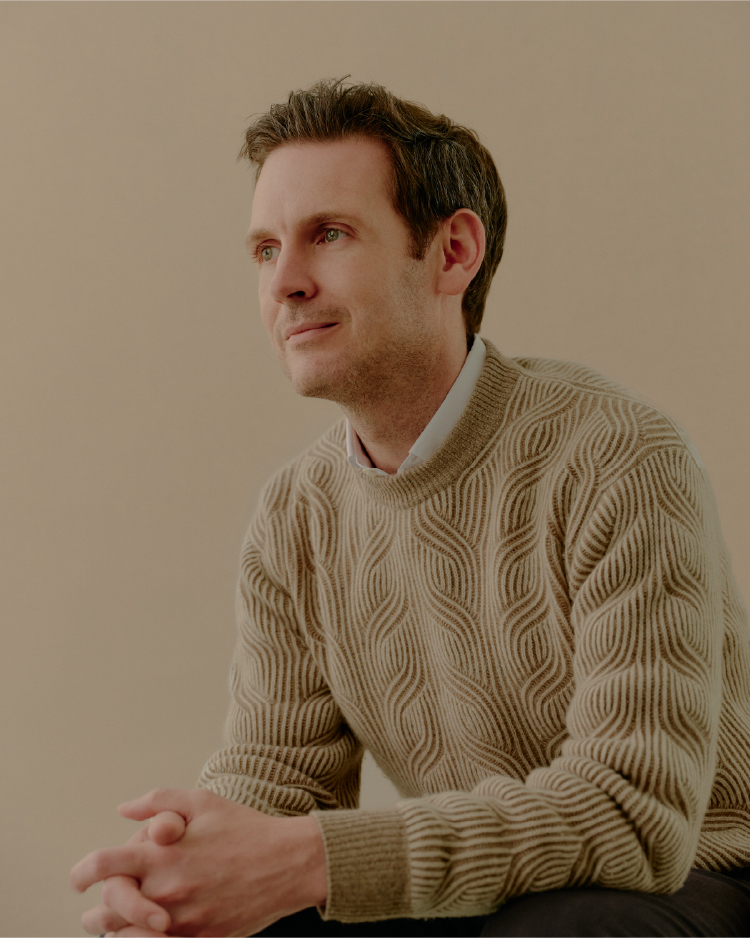
This is the first entry into what I hope can become a regular feature of our website, a journal/blog of my attempts to clarify certain concepts in mental health about which my patients frequently ask me in my capacity as their treating psychiatrist. I thought I would use this initial opportunity to outline how I currently see my role as a psychiatrist, and to allow anyone who is considering seeing me for their mental health an opportunity to understand how I have arrived at my treatment philosophy. This involves a somewhat indulgent trip down memory lane as my treatment philosophy has developed in the context of my own lived experience – similar to how psychopathology evolves with the context of lived experience in each of my patients.
It was roughly 20 years ago that my interest in psychopharmacology ignited. I was sitting in a lecture theatre of undergraduate students listening to a French pharmacologist walk us through the mechanism by which monoamine oxidase inhibitors – the original antidepressants (well, after dexamfetamine) – could cause a fatal reaction if the patient accidentally ingested cheese.
Whilst he was lamenting these patients being unable to enjoy France’s finest brie, camembert and roquefort, I couldn’t help but wonder how many other medications caused lethal responses when combined with common household foods (answer – almost zero).
As the psychopharmacology course continued, I found myself attending everyone of the 8am lectures without any hassle and managed to achieve my highest university results in that subject due to the ease with which I could study the material. A curiosity on how chemical compounds could shift our perspectives began in that lecture theatre which today is stronger than ever. I finished my pharmacy degree with a research project on the use of guanethidine (another practically ancient medication) for complex pain and by the time I started my medical degree, I had an inkling that pursuing a specialty with a strong focus on pharmacology was a foregone conclusion.
This was almost immediately derailed by my unexpected immersion in philosophy and ethics after receiving a scholarship to live at Ormond College for my four years of medical school. (What would Freud say about me opening my first clinic within walking distance of the place?) Being surrounded by students of all disciplines, I was able to hear about what others were studying and feel like I was learning as much in the evenings as I was during my classes.
It was here that I was exposed to the works of Thomas Aquinas and Immanuel Kant, who continue to provide me with endless intellectual inspiration. This ultimately culminated in a semester of evening tutorials on Plato which I feel has been the single most influential experience on my philosophy as a psychiatrist.
Without Plato there is no Freud, there is no CBT, and I agree with the sentiment that Western “philosophy consists of a series of footnotes to Plato.” The groundworks of essentially all psychotherapy were laid by Plato’s mentor Socrates in the marketplace of Athens, and it is doubtful whether anyone has really surpassed him in the tenacity of his pursuit of truth. What Socrates elucidated in his interactions with others was just how much about our lives we think we ‘know’ and the irrational and emotionally charged foundations upon which this ‘knowledge’ is built. This faulty way of thinking has been proven to plague our mental health time and time again with every passing generation, and continues to be fertile ground for many neuroscientific research groups to this day.
It is rare that I do not apply the principles discussed in the Athenian gymnasia in 400BCE to my clinical work in Carlton, 2026.
After graduating from medical school, I had my first rotation in psychiatry (the artful combination of philosophy and pharmacology) and never looked back - spending most of my waking hours over the next five years working in the public mental health system covering the northwestern corridor of Melbourne. I was deeply affected throughout this time by the power that was bestowed upon psychiatrists with their ability to compulsorily treat people suffering from significant disturbances of their mental state through the Mental Health Act. As a result, I decided to complete a further two years of advanced training to become a subspecialist forensic psychiatrist. Learning to work at the interface of the law and psychiatry was a relative baptism of fire, and being the clinical governance lead of multidisciplinary teams in maximum-security prisons is a position I continue to hold to this day. Working in prison settings is how I developed my interest and ultimately expertise in the diagnosis and treatment of ADHD.
Whereas 2-3% of the general adult population has ADHD, in prison this number is somewhere between 20-30%.
When I started working in the forensic system in 2019, treating a prisoner with severe ADHD with a stimulant was basically unheard of. Thankfully these days that is no longer the case. However, we still have much work to do and as of last year I have started a PhD into this topic of access to timely diagnosis and care for what I consider to be our most underprivileged and vulnerable citizens. Working as a prison psychiatrist means you spend many hours in prisons yourself. And whilst I do not want to think for a moment that I truly know what it is like to lose your freedom, after spending many thousands of hours in custodial environments, one begins to appreciate the psychological toll and oppression that can occur to anyone on the receiving end of state-sanctioned punishment. Being able to offer a glimmer of hope, or even just a therapeutic space within those prison walls truly is a privilege.
Over the years I have developed expertise in many of the conditions that are significantly overrepresented in the prison population, and it is mainly these conditions that I see in my busy private practice. Bipolar affective disorder, personality disorders, classical and complex post-traumatic stress disorder, substance use disorders, and of course – autism spectrum disorder and attention deficit hyperactivity disorder. I believe that my management of all of these conditions follows international evidence and best-practice guidelines, whilst also incorporating novel therapeutics and cutting-edge technologies in my practice to improve efficiency and the overall patient experience.
I have made a career out of advocating for the humane treatment of neurodivergent individuals in custody and believe that one of the strengths that I bring to my role is my capacity to see the humanity in any individual – no matter what their previous transgressions. I believe strongly in forgiveness and the capacity of anyone to transcend their past and achieve redemption.
I also believe that in order to do that, we must allow someone the opportunity to flourish by championing their autonomy as a human being, and encouraging them to demonstrate total personal responsibility. As a result, I like to work collaboratively in all cases with my patients, and allow them the opportunity to both 'challenge and be challenged' in our therapeutic alliance. I feel comfortable in the diagnosis of all mental health conditions presenting with any level of severity, and can recommend psychological and pharmacological treatment plans precisely tailored to suit your individual needs. If you place your trust in me to be a part of your mental health journey, it is a responsibility I take with the utmost seriousness. I hope that by reading this short overview of what has led me to practice in the manner in which I do, you have a good grasp of what you can expect in our first session. As always, feel free to reach out to the excellent administration team at Carlton Specialists to discuss anything that requires further clarification.


